
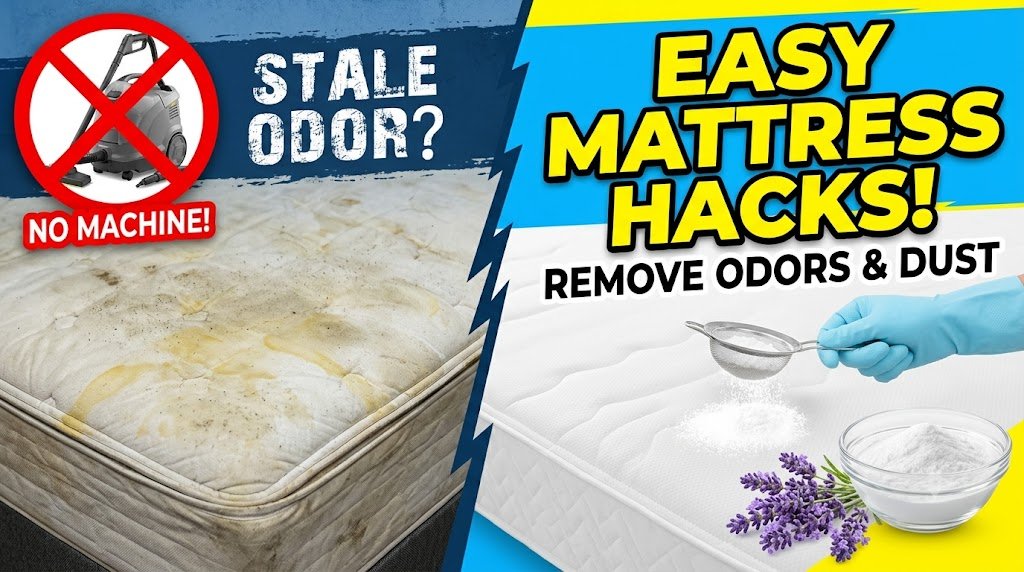
Easy Mattress Cleaning Hacks Without Machine (Remove Odour & Dust)
Trust me, it’s not fine. Mattresses are absolute magnets for gross stuff. Every single night, your body sheds millions of dead skin cells and pours out sweat. All of that nastiness sinks right through your sheets and locks directly into the fabric fibers of your mattress.
Before you know it, your bed starts to look a bit yellow and develops a strange, stale odour. It is the perfect breeding ground for microscopic dust mites too. You wake up with a stuffy nose and wonder why your allergies are acting up out of nowhere.
Most people think you need to hire a professional or buy a super expensive, heavy steam cleaning machine to fix this. But those machines are incredibly loud, bulky, and cost a fortune to rent. Plus, they soak your bed with tons of water, which takes days to dry out completely.
If your mattress stays damp for too long, you’re gonna end up with a massive mold problem inside the foam layer. That’s a total nightmare.
The good news is that you don’t need any machines at all to get your bed looking and smelling brand new. I’ve been experimenting with simple DIY cleaning hacks for years as a personal hobby. Let’s look at exactly how to deep clean your mattress completely by hand using cheap stuff from your kitchen.
The Invisible Gross Stuff In Your Bed
Before we jump into the actual cleaning steps, we need to understand what we are actually fighting against. It’s not just about the surface look.
The Nightmare of Dust Mites
Dust mites are tiny bugs that love to eat your dead skin cells. They absolutely love the warm, dark environment inside your mattress layers. They don’t bite, but their microscopic waste particles get into the air whenever you toss and turn at night. That is exactly what triggers bad morning allergies.
The Sticky Sweat Buildup
Your body naturally releases moisture while you sleep. Over a few years, that constant sweat leaves behind a salty, yellow residue on the mattress cover. This residue is what causes that heavy, sour bedroom smell that just won’t go away, no matter how many windows you open.
My Horrible Tea Spill Disaster (And The 130-Degree Hack)
Let me share a quick story about how I learned to clean mattresses the hard way. A few months ago, I was having a relaxing Sunday morning in bed. I had a massive mug of sweet black tea sitting right on my nightstand.
I went to stretch my arms and accidentally knocked the entire mug over. The hot liquid soaked straight through my heavy blanket and created a disgusting, dark brown stain about 12 inches wide right in the middle of my expensive mattress.
I panicked big time. I grabbed a soaking wet towel and started rubbing the stain back and forth as hard as I could.
How I Made It Worse
That was a huge mistake. Rubbing just pushed the sticky tea deeper into the thick memory foam core. I ended up creating a giant damp mess that weighed down that side of the bed. It smelled awful and looked like a total disaster zone.
The Dry Heat Absorbent Trick
I needed to pull the moisture out immediately without ruining the mattress material. I quickly mixed a bowl of dry cornstarch and baking soda together. I dumped about 2 lbs of this dry powder directly over the wet, sticky tea spot.
I let it sit for two hours to suck up the liquid. Then, I grabbed my handheld hair dryer. I set it to a medium heat setting, right around 130 degrees Fahrenheit, and blew the air across the powder from about 6 inches away.
The heat helped dry out the damp foam underneath, while the baking soda pulled the brown tea color and sticky odour straight up into the dry powder.
When I vacuumed the dry crust away, the mattress was completely dry and the dark stain was almost entirely gone. It was a complete lifesaver.
The Ultimate No-Machine Mattress Cleaning Showdown
Different mattress problems require different strategies. Here is a quick breakdown of the best natural home remedies you can use depending on what you’re dealing with.
| Mattress Issue | Best Natural Remedy | Total Wait Time | Fabric Safety Level |
| Heavy Body Odours | Pure Baking Soda Powder | 6 Hours | Very High (Super Safe) |
| Yellow Sweat Stains | Hydrogen Peroxide Mix | 15 Minutes | High (Test a corner first) |
| Microscopic Dust Mites | Rubbing Alcohol Spray | 30 Minutes | High (Dries instantly) |
| Fresh Liquid Spills | Dry Cornstarch Paste | 2 Hours | Very High (Great absorbent) |
Method 1: The Ultimate Dust & Odour Eraser
This is the easiest and most effective way to refresh your bed. You should do this method at least twice a year to keep things fresh.
The Step-by-Step Process
-
Strip the bed completely: Take off your sheets, mattress protector, and pillows. Put them all straight into the washing machine on a hot cycle.
-
Vacuum the bare fabric: Use your vacuum cleaner’s wide upholstery attachment. Press down firmly and move slowly across the top, sides, and seams of the mattress to suck up loose hair and dust.
-
Sprinkle the baking soda: Grab a fresh box of baking soda. Sift a heavy, even layer of the powder across the entire mattress surface.
-
Add essential oils: Drop 8 drops of lavender or tea tree essential oil directly into the baking soda before you spread it. This adds a beautiful, natural scent.
-
Let it sit long: Leave the dry powder on your bed for at least 6 hours. It needs time to chemically absorb the deep oils and stubborn smells.
-
The final vacuum: Go back over the bed with your vacuum to suck up every single white grain. Your mattress will smell incredibly clean.
Method 2: The Biological Stain Destroyer
If you have old, ugly yellow patches from sweat or pet accidents, baking soda alone won’t fix it. You need a gentle chemical reaction to lift the pigment.
The Step-by-Step Process
-
Mix your spray: Pour one cup of 3% hydrogen peroxide into a clean spray bottle. Add one tablespoon of liquid dish soap and one tablespoon of baking soda. Swirl it gently.
-
Mist the yellow zones: Spray the solution lightly directly onto the stained areas. Don’t saturate the mattress. You just wanna wet the very top layer of fabric.
-
Watch it bubble: You’ll see the mixture start to bubble slightly. This means the oxygen is breaking down the organic biological stains. Let it sit for 15 minutes.
-
Blot with a white towel: Take a clean, dry white towel and press down firmly on the wet spots. Do not rub. Just press to transfer the stain onto the towel.
-
Let it air dry: Open your bedroom windows and turn on a ceiling fan to let the fresh air dry the surface completely before making the bed.
Method 3: The Alcohol Sanitizing Mist
If you are purely worried about bacteria, dust mites, and bedbugs, a quick alcohol mist is the fastest no-water solution out there.
The Step-by-Step Process
-
Fill your spray bottle: Fill a bottle with cheap rubbing alcohol. Do not dilute it with water.
-
Spray the mattress lightly: Mist the entire surface of the bed from about a foot away. Rubbing alcohol kills dust mites and disinfects the fabric on contact.
-
Enjoy the fast dry time: The best part about alcohol is that it evaporates incredibly fast. Your mattress will be bone dry and fully sanitized within 30 minutes.
Pro Tips to Keep It Clean Longer
Once your mattress is completely clean, you wanna keep it that way for as long as possible. It saves you tons of work down the road.
Invest In A Waterproof Protector
Honestly, buy a high-quality zippered mattress protector right now. Make sure it says waterproof on the box. It acts like a bulletproof shield, blocking all sweat, skin, and accidental spills from ever touching the actual mattress fabric. You just throw the protector in the wash when it gets dirty.
Flip and Rotate Regularly
Every six months, rotate your mattress 180 degrees. If your mattress is double-sided, flip it completely over too. This prevents deep body sagging grooves from forming in the foam and allows the underside of the bed to breathe out any trapped moisture.
Frequently Asked Questions
Can I use a regular hair dryer to dry my mattress faster?
Yes, you can use a hair dryer, but you must keep it on a medium or low heat setting. Never use maximum hot air because intense heat can actually melt synthetic memory foam layers or ruin the delicate glue holding the mattress components together.
How do I get dog urine smell out of a mattress naturally?
If your pet has an accident, blot up as much liquid as possible first. Then, spray the area with straight white vinegar. Vinegar is highly acidic, which breaks down the strong ammonia crystals found in urine. After it dries, cover the spot with baking soda overnight to absorb the leftover vinegar scent.
Is it safe to sleep on a mattress right after cleaning it?
You should always wait until the mattress is completely 100 percent dry before putting your sheets back on and sleeping on it. Sleeping on a damp mattress traps body heat inside the wet fabric, which will immediately trigger mold growth and make the bad smell return.
Why did my mattress get yellow rings after I cleaned it?
Yellow rings happen when you use too much water during the cleaning process. As the water evaporates upward, it carries all the deep, old dust and dirt from inside the mattress up to the surface layer, creating a dirty ring. Always use the absolute minimum amount of liquid possible.