
Using a household hair dryer to melt and remove thick floor residue safely
There is nothing worse than walking across your living room barefoot and feeling your feet literally stick to the ground. That annoying peel-and-stick feeling drives me absolutely crazy. You look down, and the floor looks cloudy, dull, and completely messy.
It happens all the time. Maybe you spilled some sweet juice and didn’t clean it up right. Maybe your kids dropped a sticky piece of tape. Or, worst of all, maybe you just mopped your floor with way too much soap and created a giant chemical film.
Trust me, you are not alone in this fight. Sticky floors are a massive pain because they act like a magnet for every piece of dust, lint, and pet hair floating through the air. If you leave it alone, that sticky patch turns into a dark, disgusting stain in just a few days.
Your first instinct is probably to grab a heavy bucket of soapy water and start scrubbing like a maniac. Don’t do that. You’re just gonna build up the layer and make the whole thing ten times worse.
Dealing with sticky floor residue requires the right approach. If you use the wrong tool, you will scratch your beautiful laminate or dissolve the finish on your hardwood. But don’t panic. You don’t need to rent an expensive industrial floor buffer to fix this mess.
I’ve spent years testing out different household cleaning methods as a personal hobby, and I finally figured out a few simple tricks that work fast. Let’s break down exactly how to remove sticky floor residue quickly at home without breaking your back.
The Main Culprits Behind the Stickiness
Before we jump into the cleaning hacks, we need to look at what actually creates this gooey mess. It helps to know what you are dealing with before you start wiping.
The Leftover Soap Film
This is the number one reason floors turn into flypaper. Most people dump a massive amount of liquid cleaner into their mop bucket, thinking more soap means a cleaner house. It doesn’t. When the water dries, the heavy soap molecules stay behind, creating a sticky coating.
Spilled Sugary Treats
A single splash of soda, apple juice, or syrup can ruin a floor fast. Even if you wipe the liquid up with a dry paper towel, the sugar crystals stay trapped inside the tiny texture lines of the floor.
Adhesive Tape Residue
If you recently laid down an area rug or used double-sided tape for a holiday decoration, the leftover glue is a total nightmare. It bonds with the floor material and catches every single piece of dirt.
My Sticky Tape Disaster (And the 130-Degree Heat Hack)
Let let me tell you a quick story about how I learned the absolute best residue hack by making a massive mistake. A few months ago, I decided to tape down a thick rubber protective mat in my kitchen. The mat weighed about 20 lbs and kept sliding around whenever my big dog ran through the room.
I went to the hardware store and bought the strongest double-sided mounting tape I could find. It worked great for a while. But when I pulled the mat up a few weeks later, I gasped. The tape had left behind a massive, thick layer of sticky black glue that was about 48 inches long.
How I Almost Ruined the Finish
In a total panic, I grabbed a metal paint scraper from the garage. I started scraping the floor as hard as I could. Huge mistake. The sharp metal blade sliced right into my luxury vinyl planks, leaving a nasty 3-inch scratch in the protective coating.
The Miracle Hair Dryer Trick
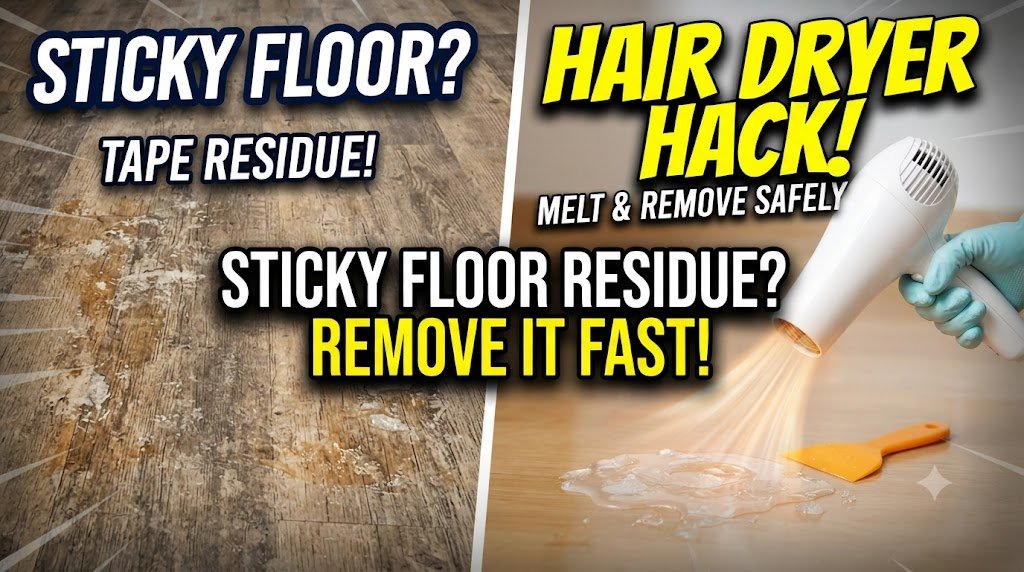
That is when I stopped scraping and tried a completely different approach using pure heat. I grabbed my regular household hair dryer from the bathroom. I turned the heat setting up to medium, which blows air out at roughly 130 degrees Fahrenheit.
I held the hair dryer about 4 inches away from the sticky glue residue. I let the warm air blast the spot for exactly 30 seconds.
The high 130-degree heat completely changed the game. It melted the hardened synthetic rubber glue instantly, turning it back into a soft, gooey gel.
I took an old plastic credit card and gently slid it across the floor. The sticky residue rolled right off the surface like warm butter. I didn’t even have to press down hard. A quick wipe with a damp rag, and the floor looked absolutely brand new.
Choosing Your Solution: The Residue-Busting Table
Different types of sticky stuff need different treatments. Here is a quick breakdown of the best home remedies based on what is stuck to your floor.
| Sticky Type | Best Cleaning Agent | Work Effort | Floor Safety Rating |
| Heavy Soap Build-Up | White Vinegar + Hot Water | Low | High (Safe for LVP & Tile) |
| Sugary Juice Spills | Blue Dish Soap Spray | Low | Very High (Super Gentle) |
| Thick Tape Glue | The Hair Dryer Heat Hack | Medium | High (Keep tool moving) |
| Stubborn Sticky Grime | Baking Soda Paste Scrub | Medium | Medium (Can be abrasive) |
Method 1: The Hot Vinegar Reset Wash
If your entire floor feels sticky because of built-up soap residue, you need a full reset wash. This method strips the old layers away completely.
The Step-by-Step Guide
-
Clear the entire room: Move all your chairs, floor mats, and pet bowls out of the way so you have a clear workspace.
-
Skip the cleaning chemicals: Empty your mop bucket. Do not add any new floor soap, liquid wax, or artificial pine scents.
-
Fill with hot water: Fill the bucket with pure, hot tap water. Hot water dissolves hardened grease and soap film much better than cold water.
-
Add the natural acid: Pour two cups of regular white vinegar into the hot water. The natural acetic acid splits the chemical bonds of the old soap.
-
Wring the mop tight: Dip your microfiber mop into the mix and squeeze it until it is barely damp. If you leave it soaking wet, the soap will just float around.
-
Mop in straight lines: Wash the floor using slow, straight vertical strokes. Rinse your mop pad frequently in the bucket to trap the lifted residue.
Method 2: The Gentle Baking Soda Scrub
If you have a single, highly stubborn sticky spot that refuses to budge after mopping, you need a safe, mild abrasive paste to lift it.
The Step-by-Step Guide
-
Create your paste: Put three tablespoons of dry baking soda into a small cup. Add one tablespoon of warm water and stir until it forms a thick paste.
-
Apply to the spot: Smear the white paste directly onto the sticky residue patch. Make sure the goo is completely covered.
-
Let it sit down: Leave the paste alone for about 15 minutes. The baking soda will physically loosen the sticky bond.
-
Scrub with a soft sponge: Take a non-scratch kitchen sponge and rub the area gently in small circles. The fine powder will scrape the glue away safely.
-
Wipe up the residue: Use a damp paper towel to wipe up the messy powder, then buff the spot dry with a clean cloth.
Method 3: The Diluted Alcohol Mist
For modern luxury vinyl plank or traditional ceramic tile, rubbing alcohol is an amazing no-residue cleaner that cuts through grease instantly.
The Step-by-Step Guide
-
Mix a 50/50 spray: Fill a clean spray bottle with half rubbing alcohol and half warm water. Give it a quick shake.
-
Mist the sticky spot: Spray a light layer over the sticky zone. Don’t drown the floor, just a fine mist will do.
-
Wipe with microfiber: Use a clean white microfiber cloth to wipe the liquid away. The alcohol dissolves the sticky grime and evaporates almost instantly.
How to Maintain a Residue-Free Floor Every Day
You don’t wanna wait until your house feels like a sticky trap to take action. A few simple daily habits will keep your floors perfectly smooth permanently.
Always Measure Your Cleaner
Honestly, stop guessing the amounts when you do chores. Read the instructions on the back of your floor cleaner bottle. If it says use one ounce per gallon, use a real measuring cup. Extra soap does not make your home cleaner; it just leaves that nasty film behind.
Vacuum Thoroughly Before You Mop
Never mop a floor that is covered in loose dust or hair. The water turns that loose dirt into a thin layer of wet mud, which blends with your soap and dries into a cloudy, sticky grime coating. Always vacuum first.
Frequently Asked Questions
Can I use a steam mop to remove sticky floor residue?
You can use a steam mop on ceramic or porcelain tiles safely. However, you should be very careful using steam on laminate or luxury vinyl plank floors. The intense heat, often reaching over 200 degrees Fahrenheit, can easily melt the protective wear layer or warp the planks.
Why did my wood floor turn cloudy after using vinegar?
If your hardwood looks cloudy, your protective polyurethane seal might be completely worn out. When you apply acidic vinegar to bare wood, it reacts with the natural tannins and creates a dull finish. Only use specialized pH-neutral wood soaps for hardwood.
Will rubbing alcohol damage my floor finish?
Rubbing alcohol is safe for vinyl, tile, and laminate if it is diluted with water. However, never use it on shellac or varnished wood floors, because alcohol acts as a solvent and will strip the shiny finish right off the wood.
How long does it take for a damp-mopped floor to dry?
If you are using the correct damp-mopping technique, your floor should dry completely within 10 minutes. If it takes longer than that, you are using way too much water. Turn on a ceiling fan to speed up the process.