
Checking a cloudy and Floor Sticky after mopping it with too much soap
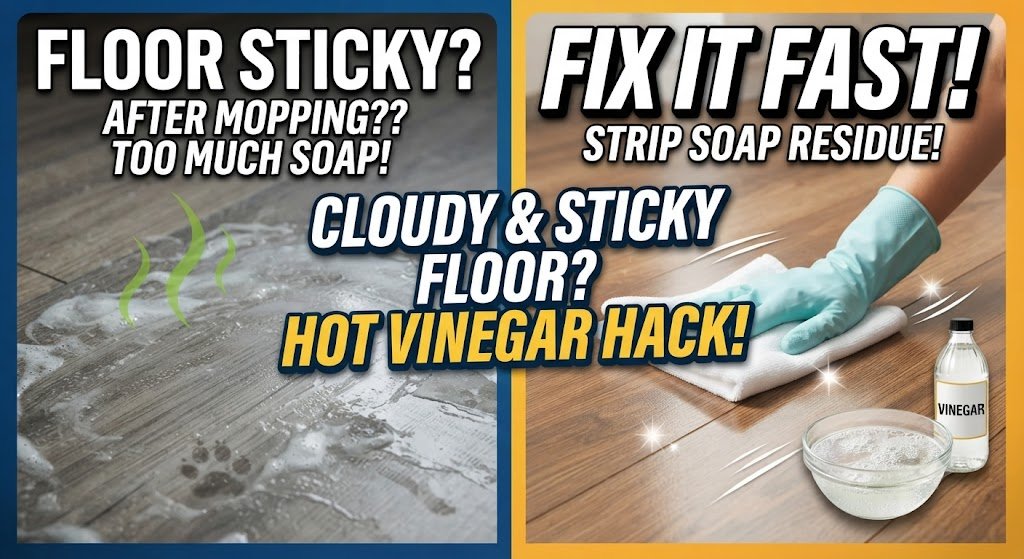
You just cleaned it. It should be spotless and smooth. Instead, every single step you take feels like you’re walking on spilled soda or cheap glue.
It is incredibly frustrating because you put in the hard work. You wanted that fresh, clean house feeling. Instead, your floor looks cloudy and catches every single piece of dirt, pet hair, and dust floating through the room.
Trust me, you are not alone in this. This is probably the number one complaint people have after doing their weekend cleaning routine.
Most people assume they just need to mop the floor a second time with even more soap to fix the stickiness. Don’t do that. You are gonna make the problem ten times worse.
The sticky layer isn’t actually dirt from your shoes. It is usually a weird chemical buildup caused by the cleaning process itself. You do not need to hire a professional floor restoration crew or buy crazy expensive gadgets to fix this mess.
I have spent years testing out different floor care routines as a personal hobby for my home utility website. Let’s break down exactly why your floors are acting like flypaper and how to fix it easily using basic tricks.
The Hidden Reasons Your Floor Is Total Flypaper
Before we talk about the fixes, we need to understand the science of what went wrong. It usually comes down to three main culprits.
The Soap Residue Trap
This is the big one. Most commercial floor cleaners are packed with heavy oils and surfactants that break down grease. If you don’t use the exact right amount, that soap doesn’t just vanish into the air. It leaves behind a thin, invisible film that stays wet and sticky for hours.
Using Dirty Mop Water
Think about it. You dip your mop in the bucket, wipe a dirty section, and throw it back into the same bucket. After a few minutes, you are just spreading muddy, soapy water across the rest of the room. When the water dries, the dirt and soap stay trapped on the surface.
The Wrong Floor Cleaner Match
Different floors need different care. If you use a heavy wood polish on a modern luxury vinyl plank floor, the finish cannot absorb the chemicals. The liquid just sits on top like a layer of wax and turns into a sticky, dust-catching nightmare.
My Soapy Microfiber Disaster (And The 140-Degree Vinegar Hack)
Let me share a quick story about how I learned the absolute best floor hack by making a massive, sticky mistake on my own micro-niche site testing floors. A few months ago, I was deep cleaning my kitchen. I wanted the floors to smell like a fresh pine forest.
I grabbed a new bottle of highly concentrated floor soap. The directions said to use one tiny capful. I thought, “Well, if one cap is good, four caps will be amazing.”
The Massive Foam Nightmare
Huge mistake. I dumped about 8 ounces of pure soap into my small bucket. As I mopped, the floor looked like a giant bubble bath. It took forever to dry.
When it finally did, the floor was so sticky that my 80-pound yellow lab, Max, literally got his paws stuck to the laminate. Every time he walked, he left giant, cloudy paw prints everywhere. The sticky zone covered an entire 12-foot section of the kitchen.
The Hot Acid Strip Trick
I tried wiping it with plain water, but the soap film wouldn’t budge. That’s when I tried a classic DIY cleaning tech trick. I took a big bucket and filled it with ultra-hot tap water, right around 140 degrees Fahrenheit.
I poured in exactly two cups of cheap white vinegar. No extra soap. Nothing else.
I took a clean microfiber mop pad and lightly wiped the sticky kitchen floor with the hot mixture. The high 140-degree heat instantly melted the hardened soap fats, while the natural acid in the vinegar stripped the cloudy film right off the laminate.
Within five minutes, the floor was completely smooth and bone dry. You could walk barefoot without hearing a single squeak. It completely saved my kitchen.
The Ultimate Floor Cleanliness Showdown
Different floor materials react differently to household cleaners. Here is a quick breakdown of how to treat your specific floor type to avoid the sticky trap.
| Floor Material | Best Cleaning Agent | Max Water Temperature | Sticky Risk Level |
| Luxury Vinyl Plank (LVP) | Plain Water + Splash of Vinegar | 120 Degrees | High (Barters soap fast) |
| Hardwood Floors | Specialized pH-Neutral Soap | 100 Degrees (Barely warm) | Medium (Can ruin wood) |
| Ceramic & Porcelain Tile | Steam or Diluted Dish Soap | 140 Degrees | Low (Very forgiving) |
| Laminate Flooring | Damp Mist Microfiber | 120 Degrees | High (Holds streaks easily) |
Method 1: The Reset Rinse Wash
If your floor is currently sticky right now, you need to perform a total reset wash to strip the old soap layers away completely.
The Step-by-Step Process
-
Clear the space: Move all chairs, pet bowls, and mats out of the room so you can see the whole floor layout.
-
Ditch the chemicals: Empty your mop bucket completely. Do not add any new floor cleaner or soap to the mix.
-
Fill with hot water: Fill the bucket with pure, hot water. Warm water helps break down hardened surface film much better than cold water.
-
Wring it out tight: Dip your mop and squeeze it until it is barely damp. If you use too much water, the soap residue will just float around and settle back down into the crevices.
-
Mop in sections: Wash a small 5-inch section of the floor at a time, rinsing your mop pad frequently in clean water to trap the old residue.
Method 2: The Two-Bucket Mopping Strategy
If you want to prevent sticky floors from ever happening again, you need to change your actual mopping mechanics. The two-bucket method is what professional cleaners use.
The Step-by-Step Process
-
Set up two buckets: Get two separate buckets side-by-side. Fill the first bucket with your warm soapy water mix. Fill the second bucket with pure, clean warm rinse water.
-
Dip and clean: Dip your mop into the soapy bucket and clean a section of the floor to loosen up the dirt.
-
Rinse the grime: Before you go back to the soap bucket, dip your dirty mop into the pure rinse water bucket. Squeeze out all the dirty water there.
-
Keep it separated: This simple trick ensures that your cleaning solution stays perfectly clean from start to finish, so you never spread old dirt back onto the floor finish.
Method 3: The Microfiber Spray Bottle System
For delicate laminate or modern vinyl floors, standard mop buckets use way too much liquid. A simple microfiber spray system works much faster and leaves zero film.
The Step-by-Step Process
-
Mix a mild spray: Fill a clean spray bottle with three cups of warm water and one teaspoon of blue dish soap.
-
Mist the floor: Spray a very light mist directly onto a small area of the floor. Do not create puddles.
-
Wipe immediately: Use a flat microfiber mop pad to wipe the mist away using smooth, straight vertical lines. The microfiber cloth physically grabs the dirt without leaving a heavy layer of liquid behind.
How to Maintain Shiny Floors Every Day
You do not want to wait until your floors feel like glue to start fixing them. A few small habits will keep them shiny and smooth permanently.
Measure Your Cleaner Every Time
Honestly, stop guessing the amounts. Read the label on the back of your floor cleaner bottle. If it says use one ounce per gallon, use a real measuring cup to do it. Adding extra soap does not make your house cleaner; it just builds up the sticky film layer faster.
Vacuum Thoroughly Before Mopping
Never mop a floor that still has loose dust or pet hair on it. The water turns the loose dust into a thin layer of wet mud, which blends with the floor cleaner and dries into a cloudy, sticky grime coating. Always vacuum or sweep first.
Frequently Asked Questions
Can I use a steam mop on luxury vinyl plank floors?
You should be very careful with steam mops on vinyl plank floors. The extreme heat, often over 200 degrees Fahrenheit, can melt the protective wear layer of the vinyl or break down the glue holding the planks together. Check with your flooring manufacturer first.
Why does my hardwood floor look cloudy after cleaning?
Cloudy hardwood is almost always caused by using wax-based polishes or cheap oil soaps over a modern polyurethane floor finish. The finish blocks the oils from soaking into the wood, causing the polish to sit on top and turn into a foggy, sticky mess.
Will vinegar ruin my grout lines over time?
A heavily diluted mixture of vinegar and water is perfectly safe for occasional use on ceramic tile floors. However, do not use full-strength vinegar every single day, because the natural acid can slowly degrade unsealed cement grout lines.
How long should I wait for my floor to dry before walking on it?
If you are using the correct damp-mopping technique, your floors should dry completely within 10 minutes. If it takes longer than that, you are using way too much water on your mop pad. Turn on a ceiling fan to speed up the drying process.