

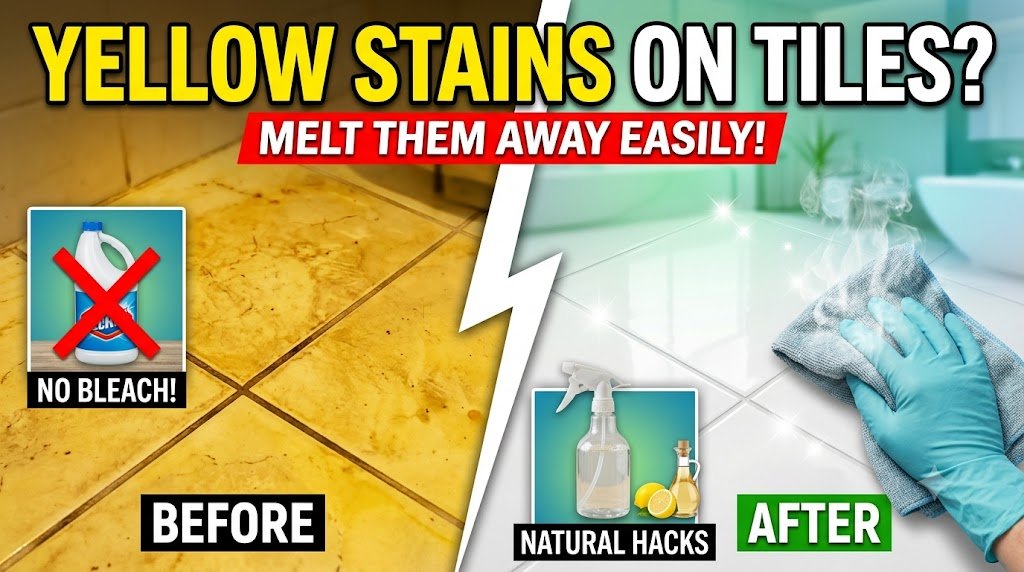
Cleaning ugly yellow mineral stains from bathroom floor tiles easily
Your bathroom should feel like a clean, fresh oasis. Instead, those nasty yellow patches make it look like a neglected gas station restroom. It is super embarrassing when you have guests over and they ask to use your bathroom.
Your first instinct is probably to run to the supermarket and buy the strongest, most toxic chemical bleach you can find. Trust me, do not do that right away. Those heavy chemical fumes will choke you out in a tiny, enclosed bathroom space.
Plus, those ultra-harsh acid cleaners can actually eat away at your grout lines over time. Once your grout gets damaged, water leaks behind the tiles, and you’re gonna end up with a massive mold problem hidden inside your walls.
You do not need to spend hours breaking your back scrubbing with heavy tools or buying expensive specialized gadgets. I have been testing out simple DIY cleaning hacks for years as a fun weekend hobby.
Let’s look at exactly how to melt away those stubborn yellow bathroom stains completely by hand using basic stuff you already have at home.
Why Do Bathroom Tiles Turn Yellow Anyway?
Before we jump into the actual cleaning steps, we need to talk about what that yellow gunk actually is. It is not just regular old dirt.
The Nightmare of Hard Water Scale
If you live in an area with hard water, your tap water is packed full of heavy minerals like calcium and magnesium. Every time you shower, water splashes onto the walls and floor. As the water evaporates, it leaves behind a crusty mineral deposit. This deposit traps dirt and turns a nasty yellow-brown color over time.
Soap Scum and Body Oils
When you wash yourself, your body oils mix with your bar soap or body wash. This creates a sticky, waxy film called soap scum. It clings to the smooth surface of ceramic and porcelain tiles like super glue. Dust and hair stick to it, turning it into a yellow layer that is incredibly tough to wipe off.
My Toxic Gas Mistake (And The 120-Degree Vinegar Hack)
Let me share a quick story about a massive mistake I made when I first started cleaning my own place. A few years ago, I moved into an apartment where the shower floor had a massive, dark yellow stain that was about 18 inches wide.
I wanted it gone instantly. In a total panic, I poured a ton of liquid chlorine bleach all over the shower floor. Then, without thinking, I sprayed a heavy-duty toilet cleaner that contained ammonium right on top of it.
The Chemical Disaster Zone
Huge mistake. Mixing bleach and ammonia creates a highly toxic chloramine gas. Within two seconds, a chemical cloud hit my face. My eyes started burning like crazy and I couldn’t breathe. I had to run out of the bathroom coughing and open every window in the house. It was terrifying.
The Safe Boiling Hack I Discovered
After that disaster, I swore off mixing random chemicals. I called up an old contractor friend, and he told me a brilliant natural hack using basic white vinegar and extreme heat.
He told me to heat pure white vinegar in a pot until it reached about 120 degrees Fahrenheit. You want it hot, but not bubbling crazy. Then, you put the hot vinegar into a spray bottle and mist it directly onto the yellow hard water crust.
The heat completely changes the game. The hot acid inside the vinegar melts the mineral scale instantly, like ice under the sun.
I sprayed the hot vinegar over that exact 18-inch yellow stain, let it sit for ten minutes, and the crusty layer literally slid right off the tile when I wiped it with a basic rag. I didn’t even have to scrub.
The Ultimate Bathroom Tile Cleaner Showdown
Different stains require different home remedies. Here is a quick, clean breakdown of the best natural ingredients based on what kind of yellow mess you are dealing with.
| Stain Type | Best Natural Remedy | Soak Time | Grout Safety Rating |
| Light Soap Scum Film | Blue Dish Soap + Warm Water | 5 Minutes | Very High (Super Safe) |
| Thick Hard Water Scale | 120-Degree Hot Vinegar | 10 Minutes | High (Rinse well) |
| Deep Yellow Grout Lines | Hydrogen Peroxide Paste | 20 Minutes | Very High (Brightens safely) |
| Sticky Rust & Iron Marks | Fresh Lemon Juice + Salt | 15 Minutes | High (Natural acid) |
Method 1: The Magic Baking Soda and Peroxide Paste
This is the absolute best method for deep, dark yellow stains that have settled right into your grout lines. Grout is super porous, so it drinks up dirty water like a sponge.
The Step-by-Step Process
-
Mix your paste: Put half a cup of baking soda into a small plastic bowl. Slowly add 3% hydrogen peroxide until it turns into a thick paste that looks like shaving cream.
-
Apply to the stains: Use an old toothbrush to smear the paste heavily over the yellow tile surfaces and stained grout lines.
-
Let the bubbles work: Leave the paste alone on the wall for at least 20 minutes. The peroxide will bubble up naturally, lifting the deep yellow pigment right to the surface.
-
Scrub gently: Take your toothbrush and scrub in small circles along the grout lines. The baking soda acts as a super mild abrasive to scrape away the loosened grime.
-
Rinse clean: Wash the paste away with a cup of warm water and wipe the tiles dry with a microfiber cloth.
Method 2: The Lemon Juice and Salt Scrub
If you have yellow stains near your chrome fixtures or drains, it is usually caused by iron rust from your pipes. Vinegar won’t touch this, but lemon juice works wonders.
The Step-by-Step Process
-
Wet the area: Squeeze fresh lemon juice directly over the yellow rust stains until they are completely soaked.
-
Add the abrasive: Pour a heavy layer of table salt right over the wet lemon juice. The salt will absorb the juice and stick to the vertical wall tiles.
-
Let it sit: Leave the mixture on the wall for 15 minutes so the natural citric acid can break down the iron oxide bonds.
-
Scrub and rinse: Use a non-scratch kitchen sponge to scrub the salty paste against the stain, then rinse thoroughly with your shower head.
Method 3: The Daily Dish Soap Preventive Spray
If you wanna stop yellow stains from ever coming back, you need a quick daily spray that prevents soap scum from hardening.
The Step-by-Step Process
-
Build the mix: Fill a spray bottle with two cups of water, half a cup of rubbing alcohol, and a tablespoon of blue dish soap.
-
Mist after showering: Every time you finish taking a hot shower, give the wet walls a quick mist with this solution.
-
Squeegee down: Use a cheap rubber squeegee to wipe the liquid down into the drain. The alcohol evaporates the water fast, and the soap prevents grease buildup.
Frequently Asked Questions
Can I use a magic eraser on bathroom tiles?
Yes, magic erasers work incredibly well on smooth ceramic and porcelain tiles to remove yellow surface film. However, do not use them on delicate natural stone tiles like marble or slate, because they can scratch the expensive shiny polish off the stone.
Why does my grout turn yellow again so fast?
If your grout turns yellow right after cleaning, it means your old grout sealer has completely worn off. You need to let the grout dry for 24 hours, then apply a high-quality liquid grout sealer to lock out moisture and oils.
Is white vinegar safe for all types of bathroom tiles?
Vinegar is perfectly safe for ceramic, porcelain, and glass tiles. But you must never use vinegar or lemon juice on marble, granite, or limestone. The natural acid will chemically etch the stone and leave permanent white dull marks.
How do I get rid of the strong vinegar smell after cleaning?
Don’t worry about the sour smell. Just turn on your bathroom exhaust fan or open the bathroom window. The heavy vinegar scent will vanish completely the exact second the liquid dries on the tiles, usually within 30 minutes.