

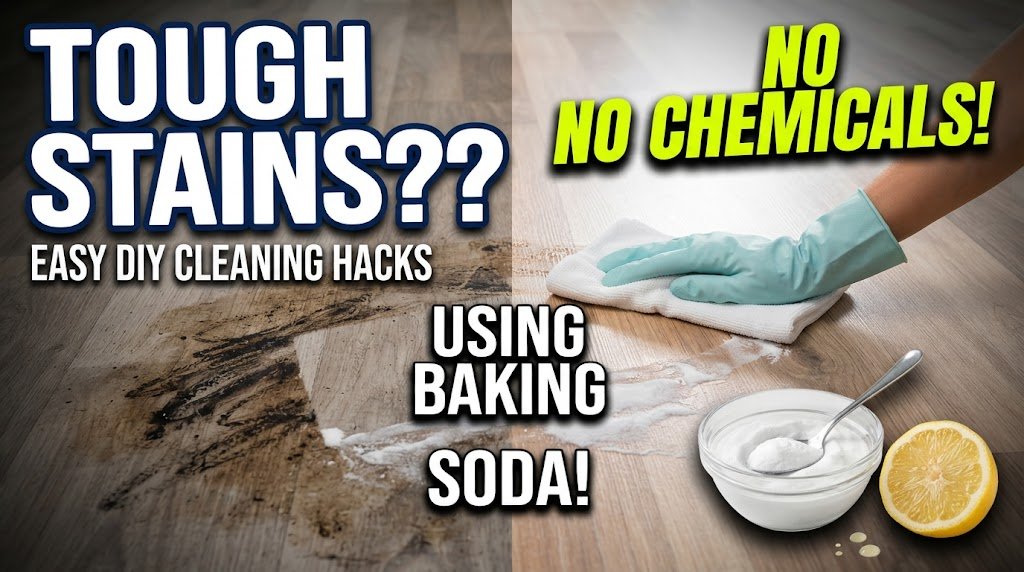
Applying easy ways to remove tough stains from floor without chemicals using baking soda
Honestly, nothing ruins the vibe of a clean home faster than a giant, ugly stain right in the middle of your floor. You can dust every shelf, clean the windows, and tidy up all the clutter. But the second you look down and see a dark mark on your beautiful floor, the whole room feels dirty.
It happens to everyone. Maybe you dropped a greasy piece of food while cooking dinner. Maybe your kid went wild with a purple crayon. Or maybe your pet had a sudden accident on the rug or tile.
Trust me, your first instinct is probably to run to the store and buy the strongest, most toxic bottle of chemical floor cleaner you can find. Don’t do that. Those harsh chemical cleaners are bad news. They smell terrible and breathe out nasty fumes that fill up your whole house.
Plus, those intense chemicals can actually strip the protective shine right off your laminate, wood, or luxury vinyl flooring. Once that finish is gone, your floor is ruined for good.
You don’t need those toxic bottles at all. I have spent years testing out simple, natural cleaning methods as a personal weekend hobby. I finally figured out a few clever tricks that get rid of the worst stains fast using basic kitchen items.
Let’s break down exactly how to remove tough stains from your floor without chemicals, step by step, without hurting your back or your wallet.
The Hidden Danger of Store-Bought Cleaners
Before we talk about the natural ways to clean, we need to look at why chemical bottles are a bad idea. It’s not just about the strong smell.
The Chemical Film Trap
Most store cleaners don’t rinse away cleanly. They leave behind a sticky, invisible film of soap and chemicals on the floor finish. This film actually works like a magnet for dust and dirt. Every step you take creates a new mark, making your floor look cloudy and sticky in just a few days.
Ruining Your Floor Finish
Different floors have different coatings. Hardwood has poly or wax, and vinyl has a clear wear layer. Heavy chemical solvents can eat right through these coatings. Once the chemical pierces that line, dirt sinks deep into the actual wood or vinyl pores, and the stain becomes permanent.
My Greasy Wax Disaster (And the 140-Degree Heat Hack)
Let let me share a quick story about how I learned the absolute best natural stain hack by making a massive mistake on my own floors. A few months ago, I was burning a huge, scented candle in my living room. My big, 80-pound yellow lab came running through the room and bumped right into the side table.
The heavy glass candle tipped over instantly. A massive wave of hot, oily candle wax splashed all over my premium laminate floor, creating a disgusting, hard blob that was about 12 inches wide.
How I Almost Ruined the Planks
I panicked big time. I grabbed a sharp metal butter knife from the kitchen and started scraping the hardened wax as hard as I could. Huge mistake. The sharp metal blade sliced right past the wax and dug into the laminate, leaving a nasty 3-inch scratch right in the center of the room. I was totally devastated.
The Paper Bag Magic Trick
That is when I stopped scraping and tried a smart, chemical-free trick using basic heat and a brown paper grocery bag. I cut a flat square piece out of the brown paper bag and laid it directly over the remaining hard wax stain.
I grabbed my household clothes iron and set it to a medium heat setting, right around 140 degrees Fahrenheit. I turned the steam function completely off because moisture would ruin the floor boards.
I gently pressed the warm iron flat against the brown paper bag for exactly 15 seconds. The low 140-degree heat traveled through the paper and melted the oily wax underneath instantly.
The super absorbent wood pulp inside the brown paper bag acted like a giant sponge. It sucked the liquid wax right out of the floor pores.
When I lifted the paper up, the wax came along with it, leaving the floor completely smooth and clean. I didn’t have to use a single drop of toxic chemical solvent.
The Ultimate Chemical-Free Stain Showdown
Different floor stains require different natural ingredients to break them down. Here is a handy reference table to show you which home remedy works best for your specific floor disaster.
Method 1: The Magic Baking Soda Power Scrub
Baking soda is the absolute king of chemical-free cleaning. It acts as a super mild abrasive, which means it can scrub away tough surface marks like crayon, ink, and shoe scuffs without scratching your floor finish.
The Step-by-Step Guide
-
Mix your natural paste: Put three tablespoons of dry baking soda into a small cup. Slowly add one tablespoon of warm water and stir it up until it forms a thick paste that looks like white toothpaste.
-
Apply to the mark: Smear the white paste directly over the floor stain using your fingers or a soft cloth. Make sure the mark is completely covered.
-
Rub in straight lines: Take a damp white microfiber cloth and rub the paste against the stain using gentle, vertical lines. Never scrub in heavy circles or you might dull the shiny finish of the floor.
-
Wipe up the residue: Use a clean, damp paper towel to wipe up the leftover white powder grime. Buff the area dry with a fresh towel to prevent streaks.
Method 2: The Deep-Pull Cornstarch Trick
If you drop a greasy piece of bacon or spill cooking oil on your floor, wiping it with water won’t work because oil hates water. You need a dry ingredient that will draw the grease upward out of the floor texture.
The Step-by-Step Guide
-
Cover the oil immediately: Do not try to wipe the wet oil around. Instead, dump a heavy pile of dry cornstarch powder directly over the grease splatter.
-
Let it sit long: Leave the cornstarch pile alone on the floor for at least 2 hours. As it sits, the cornstarch works like a million tiny dry sponges, soaking up the oils.
-
Sweep it away: Use a soft broom or a dry paper towel to sweep the greasy powder into a trash bin.
-
Final damp wipe: Give the spot a quick wipe with a cloth dipped in warm water mixed with one drop of blue dish soap to remove any leftover powdery film.
Method 3: The Lemon and Soda Fizz
Dark, colorful stains from things like coffee, wine, or fresh berries can dye your floor grout or light wood fast. The natural acid in lemons works beautifully to bleach the dark color away safely.
The Step-by-Step Guide
-
Squeeze the fresh juice: Squeeze fresh lemon juice directly over the colorful stain until it is completely covered.
-
Add the bubbling fizz: Pour a splash of plain club soda right on top of the lemon juice. The carbonation bubbles will help lift the stain particles up out of the floor pores.
-
Let it work: Let the liquid mixture sit on the spot for about 5 minutes to break down the natural pigments.
-
Blot with a towel: Take a clean white towel and press down firmly on the wet spot to transfer the color onto the fabric. Never rub back and forth or you will spread the dye.
Simple Daily Habits for Clean Floors
You don’t want to wait until your home looks like a total disaster zone to start caring for your floors. A few easy daily habits will keep stains away permanently.
Vacuum or Sweep First
Never mop a floor that has loose dust or pet hair on it. The water turns that loose dust into a thin layer of wet mud, which dries into a cloudy, sticky grime coating that is super hard to clean later. Always vacuum first.
Use the Two-Bucket Method
If you are mopping a large room with water and vinegar, always use two separate buckets. Fill one with your clean mixture and the other with pure water. Rinse your dirty mop in the pure water bucket before dipping it back into the clean mix. This stops you from spreading dirty water across the floor.
Frequently Asked Questions
Can I use vinegar on real hardwood floors?
You should be very careful with vinegar on hardwood. Vinegar contains natural acetic acid. If your wood floor has a worn-out protective seal, the acid can soak into the bare wood, react with the natural elements, and turn the floor a dull, cloudy gray color over time.
Will baking soda scratch my modern luxury vinyl plank floors?
No, baking soda is incredibly soft. On the science scale of mineral hardness, it ranks very low, making it much softer than the clear plastic wear layer on your vinyl planks. Just make sure to use a soft cloth and don’t press down with crazy heavy force.
How do I get old dried ink stains off tile grout?
Grout is super porous, so ink sinks deep inside. Make a thick paste using hydrogen peroxide and baking soda. Apply it to the grout line, let it bubble for 20 minutes, then scrub gently with an old toothbrush before rinsing with warm water.
Why does my floor look cloudy after cleaning with plain water?
If your floor looks cloudy after using pure water, it means there is a heavy buildup of old chemical soaps from previous cleanings. The water is melting the old soap layer but not removing it. Run a hot water and vinegar wash to strip that old film away completely.