

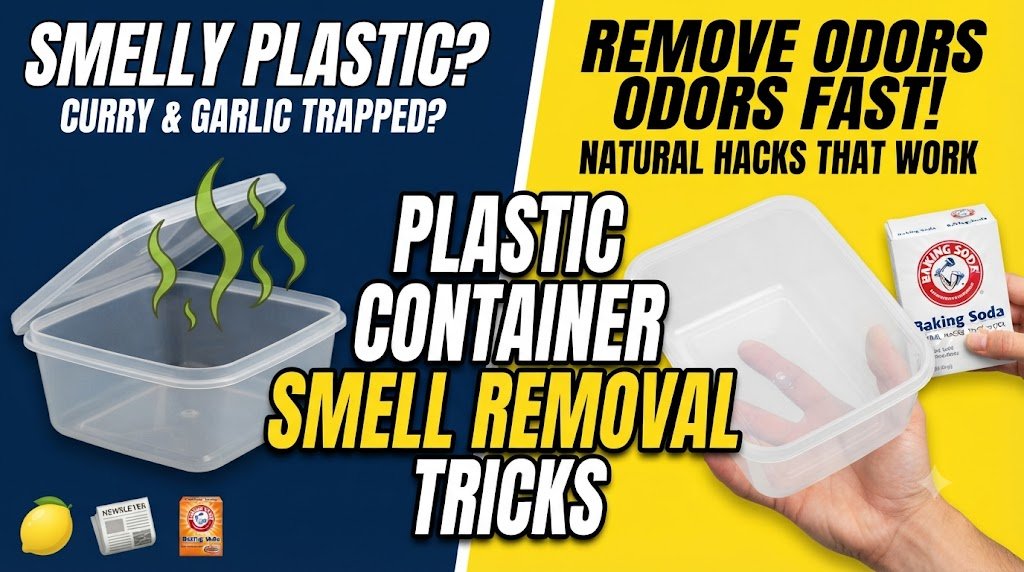
Plastic Container Smell Removal Tricks
Honestly, there is nothing worse than opening your kitchen cupboard to pack a nice, fresh lunch, popping the lid off a plastic container, and getting smacked in the face by the ghost of last week’s garlic curry. It is completely disgusting.
You already washed it. You ran it through the dishwasher twice. It looks totally clean to your eyes. But the second you sniff it, that heavy, stale food stench is still trapped inside the plastic walls.
Trust me, you are not alone in this fight. This is the absolute biggest curse of using plastic food storage containers. Plastic is lightweight and cheap, but it is also incredibly porous.
To a microscope, plastic looks like a giant sponge full of millions of tiny hidden holes. When you put hot, greasy food inside, the plastic expands and drinks up the food oils. Once the container cools down, those tiny pores close up and lock the smelly oils inside permanently.
If you try to pack a fresh ham sandwich or some light fruit in there the next day, the trapped garlic odour transfers right into your new food. Your strawberries end up tasting like onions. It completely ruins your lunch vibe.
Most people think their only option is to throw the smelly box in the trash bin and buy a brand new set. Don’t do that. You don’t need to waste your hard-earned money.
I’ve spent years trying out weird household cleaning experiments as a personal hobby. I finally discovered a few simple, natural tricks that actually break down those trapped oil bonds fast. Let’s look at exactly how to fix your smelly plastic boxes using basic stuff from your kitchen.
The Big Mistake Everyone Makes with Hot Plastic
Before we jump into the actual smell-busting hacks, we need to talk about a massive mistake that almost everyone makes when dealing with leftovers.
The Hot Food Trap
When you finish cooking a big dinner, you want to clean up fast. You scoop the steaming hot food straight from the pan directly into your plastic container and snap the lid on tight. This is the absolute worst thing you can do.
The high heat opens up the plastic pores instantly, allowing the greasy oils to sink deep into the material finish. Always let your food cool down completely on the counter before you store it in plastic.
Avoid the Ultra-Hot Dishwasher Cycle
Dishwashers are great for sanitizing plates, but the extreme heat cycle can actually bake the odours deeper into cheap plastic boxes. The hot water melts the surface oils slightly, but it doesn’t wash them away entirely. Instead, it spreads the greasy film across the entire interior wall.
My Smelly 140-Degree Onion Disaster (And the Newspaper Hack)
Let me share a quick story about how I learned the absolute strangest smell removal hack by making a total mess. A few months ago, I made a massive batch of pickled red onions for a family barbecue. I packed about 2 lbs of raw, heavily seasoned onions into a premium large plastic storage tub.
The tub sat in the back of my fridge for a full week. When the party was over, I dumped the leftover onions out and washed the container with standard blue dish soap and water.
The Stink Was Invincible
It didn’t work at all. The heavy onion smell was so intense it filled my entire small kitchen whenever I left the box open on the counter. In a total panic, I decided to use extreme heat to boil the smell away. I filled my kitchen sink with ultra-hot water, right around 140 degrees Fahrenheit, and submerged the container.
Huge mistake. The high 140-degree heat didn’t remove the smell. It just warped the thin plastic lid, turning a nice square edge into a wavy, twisted mess. The lid wouldn’t even snap onto the box anymore. I had completely ruined a good container.
The Black and White Paper Miracle
That is when I called my mom, and she told me an old-school trick using nothing but a regular daily newspaper and a tiny bit of charcoal. She told me to crumble up two large pages of classic black-and-white newspaper.
You stuff the dry crumpled paper tightly inside the smelly plastic container. Drop a tiny charcoal briquette in the middle if you have one. Then, you snap the lid on and leave it alone on your counter for exactly 48 hours.
Honestly, I thought she was joking. But I tried it anyway. Newspaper is made from highly porous recycled wood pulp, and the black carbon ink acts like a giant natural sponge.
Over those two days, the dry paper literally drew the airborne onion molecules out of the plastic pores. When I opened the box and took the paper out, the container smelled completely neutral. It was wild. I didn’t have to use a single drop of water or soap.
The Ultimate Plastic Deodorizing Showdown
Different types of food stinks require different natural solutions. Here is a handy breakdown of the best home ingredients to use based on what you packed for dinner.
| Stink Type | Best Natural Remedy | Total Wait Time | Plastic Safety Level |
| Garlic & Onion Oils | Dry Newspaper Stuffing | 48 Hours | Very High (Zero moisture) |
| Sour Milk & Dairy Odours | Baking Soda Paste | 2 Hours | High (Mild abrasive) |
| Fish & Seafood Stench | Pure White Vinegar Soak | 4 Hours | High (Cuts grease film) |
| Spicy Tomato & Chili Stains | Direct Hot Sunlight | 6 Hours | Medium (Can fade colored plastic) |
Method 1: The Baking Soda Power Scrub
Baking soda is the absolute king of household odor removal. It doesn’t just cover up bad smells with perfume—it chemically alters the acidic odor molecules to neutralize them completely.
The Step-by-Step Instructions
-
Make your paste: Put four tablespoons of dry baking soda into a small cup. Add one tablespoon of warm water and stir until it forms a thick paste that looks like white glue.
-
Coat the inside walls: Use a soft sponge or your fingers to smear the paste heavily all over the interior walls and corners of the smelly plastic box.
-
Don’t forget the lid: The rubber sealing gasket on the lid traps more smell than the actual box. Smear the paste deep into the rubber groove lines too.
-
Let it dry out: Leave the paste alone on your counter for at least 2 hours. As the water evaporates, the baking soda powder pulls the trapped grease out of the pores.
-
Scrub and rinse: Take a non-scratch sponge and scrub the dry crust firmly with a splash of warm water, then rinse thoroughly.
Method 2: The Pure White Vinegar Bath
If your container smells like old fish or spoiled cheese, you need an acid-based solution to cut through the sticky, invisible fat film clinging to the plastic.
The Step-by-Step Instructions
-
Create a 50/50 mix: Fill the smelly plastic container halfway up with regular white vinegar. Top it off with warm tap water until it reaches the absolute brim.
-
Submerge the lid: Flip the lid upside down and lay it right on top of the open container so the rubber seal is completely touching the vinegar liquid.
-
Set a timer: Let the box soak on your counter for a full 4 hours. The natural acetic acid will dissolve the smelly grease bonds.
-
Wash with soap: Dump the vinegar down the drain and wash the container one time with warm water and normal dish soap to remove the sour vinegar scent.
Method 3: The Free Solar Sunlight Trick
If you have a container that is both incredibly smelly and covered in ugly orange tomato sauce stains, nature can fix it for free.
The Step-by-Step Instructions
-
Wash the container first: Clean the plastic box with normal soap and water so there is no solid food left inside.
-
Find a sunny spot: Take the open container and the lid outside to your porch or window sill. Place them down where they will get direct, intense afternoon sunlight.
-
Leave it all day: Let the plastic bake in the sun for at least 6 hours.
-
The UV bleaching effect: Natural ultraviolet rays from the sun act as a powerful, free bleaching agent. The UV light breaks down the organic tomato pigments and instantly neutralizes any lingering food smells.
Frequently Asked Questions
Can I use charcoal briquettes to remove plastic smells?
Yes, activated charcoal works amazingly well. Just place one small piece of clean, unused charcoal inside the dry container, close the lid tight, and leave it alone for a day. The charcoal will suck the bad smells right out of the air.
Why does my plastic container still smell after bleach?
Bleach is great for killing live bacteria, but it doesn’t dissolve stubborn food oils. If the smell stays, the old oils are still buried deep inside the plastic pores where the liquid bleach cannot reach. You need an absorbent like baking soda or newspaper to pull them out.
Is it safe to wash smelly plastic with boiling water?
No, you should never use boiling water on thin plastic storage boxes. Most cheap containers are made from polypropylene, which can warp or leach harmful chemicals like BPA if exposed to temperatures near boiling point. Always stick to warm water.
How do I stop plastic containers from smelling in the future?
The best way to prevent odors is to rinse your containers with cold water immediately after you finish eating. Never let old food scraps sit inside a closed container in your sink for days, because the dark, damp environment speeds up the odor absorption process.