

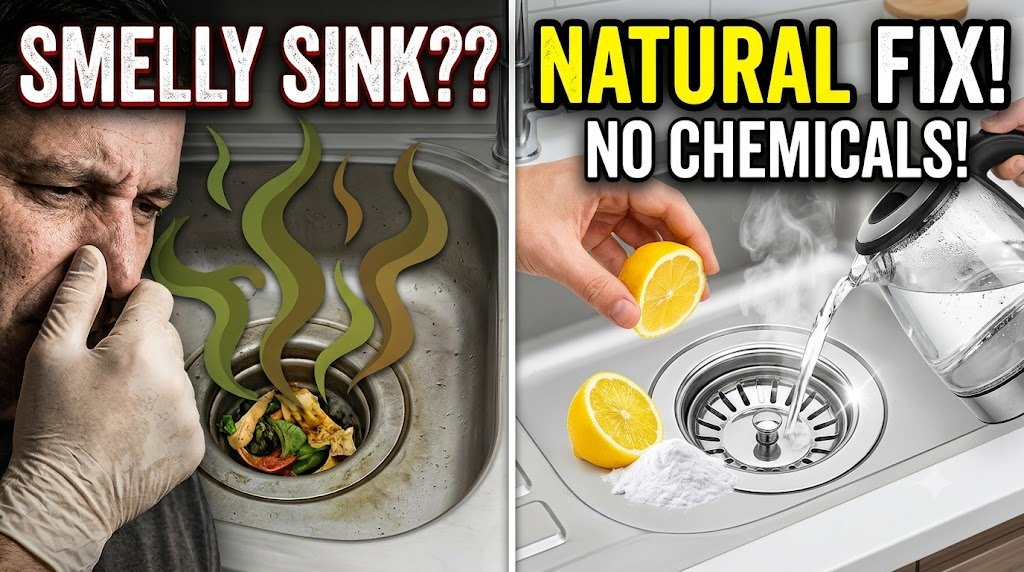
How to Clean Kitchen Sink and Remove Bad Smell Naturally at Home
You look around thinking it’s the trash can. You empty the bin, but the stink is still there.Then you get closer to the kitchen sink. Oh man. It hits you like a wall. That dark, damp drain hole is breathing out a massive wave of pure funk.
It is incredibly frustrating because the kitchen sink is the one thing we use all day long. We wash our fresh vegetables there. We clean our dinner plates there. It should be the cleanest spot in the entire house.
Instead, it turns into a greasy, slimy swamp. Every time you rinse a plate, tiny bits of food, heavy cooking oils, and sticky soap scum slide down the drain. They don’t all disappear.
A lot of that gunk gets stuck to the inside of the pipes. It sits there in the dark, damp warmth and starts to rot. Before you know it, your sink looks dull, covered in cloudy white water spots, and smells like a sewer.
Your first reaction is probably to run to the store and buy a massive jug of chemical drain cleaner. Trust me, do not do that. Those heavy liquid acids are incredibly dangerous. They can melt your old plastic pipes and ruin your stainless steel finish.
Plus, the toxic fumes will choke you out instantly. You do not need those harsh chemicals at all. I have been playing around with natural cleaning hacks for years as a fun weekend hobby.
Let’s break down exactly how to deep clean your kitchen sink and kill that nasty odour completely by hand using cheap stuff you already have in your pantry.
Why Your Kitchen Sink Smells So Bad
Before we start throwing natural ingredients down the hatch, we need to talk about what is actually causing that disgusting stench. It helps to know what you are fighting.
The Hidden Slimy Biofilm Layer
Inside your drain pipes, there is a disgusting layer of bacteria growing called biofilm. It eats the tiny microscopic food particles that slide down the drain. As it eats, it creates a thick, sticky slime that smells absolutely awful.
The Trapped Food Trap
If you have a garbage disposal, the problem is usually ten times worse. The under-side of the black rubber splash guard is a major disaster zone. Food splashes up under there and rots in the dark where you can’t see it.
My Greasy Clog Mistake (And The 212-Degree Water Hack)
Let me share a quick story about how I learned the ultimate sink cleaning trick by making a massive, messy mistake. A few months ago, I hosted a big family dinner and cooked a massive pot of beef chili. I had about 2 lbs of hot, melted ground beef grease sitting in the pan.
I was tired and lazy. Without thinking, I poured the whole pan of hot liquid fat straight down the kitchen sink drain. I turned on the cold water for five seconds and went to bed.
The Solid Fat Blockage
That was a monumental mistake. The cold water instantly chilled the beef grease inside the pipes. It turned into a rock-hard, solid white fat plug about 10 inches down the drain line. The sink completely backed up. Gross, dirty dishwater filled the basin and wouldn’t budge. The smell was completely unbearable within 24 hours.
The Boiling Flush Discovery
I refused to call an expensive plumber. I knew I needed to melt that fat plug without melting my actual PVC pipes. I grabbed my biggest metal pot and filled it with water. I brought it to a roaring boil on the stove, right at 212 degrees Fahrenheit.
I poured half a cup of regular dry baking soda straight down the backed-up drain. Then, I carefully dumped the roaring 212-degree boiling water right on top of it.
The intense heat from the water instantly liquified the hardened beef fat, while the baking soda created a fizzy reaction that scoured the pipe walls clean.
I heard a loud gurgling pop, and the dirty water suddenly shot straight down the drain. It cleared the clog instantly and completely erased the rotting smell. I’ve used this simple heat trick every single week since then.
The Ultimate Natural Sink Cleaning Showdown
Different parts of the sink need different natural treatments. Here is a quick, easy breakdown of the best home ingredients based on what you are trying to fix.
| Sink Problem | Best Natural Remedy | Action Time | Surface Safety Level |
| Cloudy White Water Spots | White Vinegar Spray | 5 Minutes | Very High (Shines metal) |
| Dull Metal & Scratches | Dry Baking Soda Scrub | 10 Minutes | High (Super mild abrasive) |
| Rotting Drain Odour | Boiling Water + Ice + Lemons | 15 Minutes | High (Great for disposals) |
| Tough Rust Around Faucet | Fresh Lemon Juice + Salt | 20 Minutes | Medium (Rinse well) |
Method 1: The Ultimate Basin Deep Clean
This is how you get your stainless steel or ceramic sink looking so shiny you can see your face in it. It takes less than ten minutes.
The Step-by-Step Process
-
Rinse the sink empty: Take out all dishes and the sink strainer. Rinse the whole basin with warm water to remove loose crumbs.
-
Coat with baking soda: Shake a heavy layer of dry baking soda all over the wet sink basin. It will stick to the sides and form a light powder coating.
-
Scrub with the grain: Take a soft non-scratch sponge and scrub the basin firmly. If you have a stainless steel sink, always scrub in the same direction as the brushed metal lines.
-
Mist with vinegar: Spray a light mist of white vinegar directly onto the baking soda. It will start to fizz and bubble wildly. This reaction lifts off tough water stains.
-
Rinse and buff dry: Wash the fizz away with hot tap water. Use a dry microfiber cloth to wipe the metal dry. This stops new water spots from forming.
Method 2: The Odour-Crushing Drain Flush
If your basin is clean but the drain still smells like a swamp, you need a deep chemical-free flush to strip the sticky biofilm away.
The Step-by-Step Process
-
The dry pour: Dump half a cup of baking soda straight down into the dry drain hole. Push it down with a spoon if it gets stuck.
-
The acid fizz: Pour one full cup of white vinegar right after it. Put the drain stopper over the hole immediately to trap the fizzing gas inside the pipe. Let it work for 15 minutes.
-
The boiling blast: While it fizzes, boil a kettle of water. Remove the stopper and pour the boiling water straight down to wash away the loosened grease grime.
Method 3: The Garbage Disposal Ice Trick
If you have a garbage disposal unit under your sink, the internal grinding blades get coated in old food fat that smells awful. You can clean them using ice cubes.
The Step-by-Step Process
-
Fill with ice: Throw two cups of regular ice cubes straight into the disposal unit.
-
Add the citrus: Cut a fresh lemon into small chunks and toss them in with the ice. Lemon juice contains citric acid that cuts grease and smells amazing.
-
Run the cold water: Turn on your cold tap water and flip the disposal switch on.
-
Let it grind: Let the machine grind the ice and lemons for 30 seconds. The hard ice cubes physically scrape the grease off the spinning blades, while the lemon peels deodorize the whole chamber.
How to Maintain a Fresh Sink Every Day
You don’t want to wait until your kitchen smells like a garbage dump to clean it. A few simple daily habits will keep the stink away permanently.
Never Pour Oil Down the Drain
Honestly, just stop doing it. Keep an old empty coffee can or glass jar under the sink. Pour all your liquid cooking fats, bacon grease, and salad dressings into the jar instead. Once it hardens, throw the jar in the trash can. Your pipes will thank you.
The Nightly Hot Flush
Every single night after you finish doing the dishes, let the hot tap water run down the drain at full speed for exactly 60 seconds. This simple step flushes away any fresh food particles and liquid soaps before they have a chance to settle down and start rotting.
Frequently Asked Questions
Can I use baking soda and vinegar on a composite granite sink?
Baking soda is perfectly safe for composite granite sinks because it is super gentle. However, do not let acidic vinegar sit on black granite for a long time or it can dull the beautiful dark finish. Always rinse it off within a few minutes.
Why does my sink still smell after using baking soda?
If the smell stays, the gunk is likely trapped under the black rubber splash guard of your garbage disposal. Take an old toothbrush dipped in dish soap, flip the rubber guard inside out, and scrub the slimy underside. You will be shocked at how gross it is under there.
How often should I clean my kitchen drain naturally?
You should do the quick baking soda and vinegar flush once every single week. It only takes a few minutes and prevents the smelly biofilm layer from ever building up inside your kitchen pipes.
Is it safe to use boiling water in plastic pipes?
Yes, standard household PVC pipes can easily handle boiling water for a short flush. Just make sure you pour the water straight down the center of the drain hole rather than letting it sit in a stagnant pool inside the basin.