

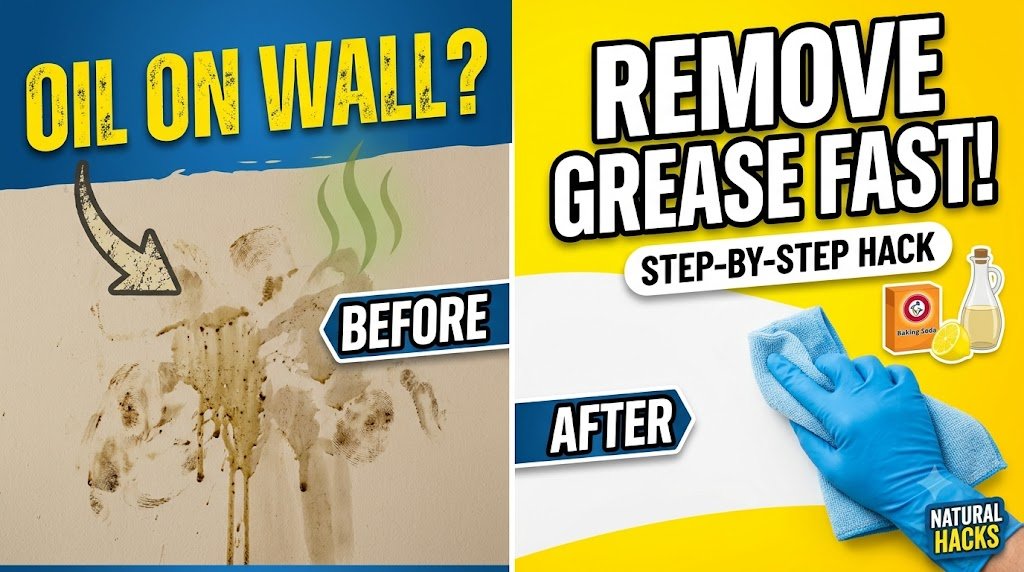
How to Remove Oil Stains from Wall at Home Easily (Step-by-Step Guide)
Nothing ruins your day faster than looking up at your beautiful kitchen or living room wall and spotting a massive, greasy oil stain. Maybe it was an explosion of cooking oil from last night’s dinner. Maybe your kid decided to touch the drywall right after eating a slice of greasy pizza. Or maybe, like me, you leaned against the wall with oily hair without thinking.
It looks awful. Your first instinct is probably to grab a wet rag and scrub like crazy. Trust me, don’t do that. You’re gonna smear the oil around and make the whole thing ten times worse.
Dealing with oil stains on walls is tricky because paint loves to absorb grease. If you use the wrong chemical, you’ll strip the paint right off. If you use too much water, you’ll ruin the drywall underneath. But don’t panic. You don’t need to repaint the whole room just yet.
I’ve spent years trying out different home hacks for this exact problem, and I finally figured out a few bulletproof methods that actually work without killing your arms. Let’s break down exactly how to fix this, step by step, using basic stuff you already have in your kitchen cupboards.
The Golden Rules Before You Start
Before we jump into the actual cleaning part, we need to talk about basic rules. You wanna make sure you don’t ruin your paint job completely.
Check Your Paint Type First
If you have glossy or semi-gloss paint, you’re in luck. These paints have a shiny protective layer that blocks oil from soaking deep inside. You can usually wipe them clean with simple dish soap. But if you have flat, matte, or eggshell paint, you need to be incredibly careful. These paints are super porous. They drink up oil like a sponge, and they rub off easily if you scrub too hard.
Why Speed Matters
Always act fast. The longer that grease sits on your wall, the deeper it sinks into the drywall. Fresh stains come out in two minutes. Stains that have been sitting there for six months? They’re gonna take some serious patience.
The Correct Wiping Motion
Never scrub in circles. When you scrub in a circle, you push the grease deeper into the pores of the paint. Always wipe gently from the outside of the stain toward the center, or use straight up-and-down motions.
My Clumsy 80-Pound Mistake (And the Ultimate Hack I Learned)
Let me tell you a quick story about how I learned this the hard way. A few months ago, I bought a massive 80-pound dog. He’s a gorgeous, hyperactive mess. One afternoon, he managed to knock over a fresh, warm bottle of massage oil right next to my main living room wall.
The oil splashed everywhere, creating a massive grease mark about 24 inches wide. It looked like a total disaster zone. In a total panic, I grabbed a heavy-duty chemical cleaner from the garage and started scrubbing the wall like a madman.
How I Ruined the Paint
Big mistake. The chemical was way too harsh. Within ten seconds, I didn’t just remove the oil—I completely stripped away a 10-inch patch of the premium matte latex paint. The wall looked completely discolored and ruined.
The Miracle Iron Trick
That’s when I called an old painter buddy of mine. He laughed at me and shared a brilliant hack that saved my life. He told me to use a regular household iron and a brown paper grocery bag.
You just place the paper bag flat over the oil stain. Turn your iron to a medium heat setting, around 140 degrees Fahrenheit. Make sure the steam setting is completely turned off. Then, you gently press the warm iron against the paper bag for about 15 seconds.
The heat from the iron melts the trapped grease inside the wall, and the absorbent brown paper sucks it right out of the paint. It worked like absolute magic. The paper bag turned dark brown from all the absorbed oil, and the wall looked completely clean. I didn’t even have to touch a sponge.
Choosing Your Weapon: The Ultimate Stain-Fighting Table
Different stains need different treatments. Here is a quick breakdown of the best home remedies based on what you are dealing with.
| Stain Type | Best Cleaning Agent | Effort Level | Safety Level for Matte Paint |
| Fresh Cooking Oil Splashes | Blue Dish Soap + Warm Water | Very Low | High (Safe if gentle) |
| Old, Baked-In Grease | Baking Soda Paste | Medium | Medium (Can be abrasive) |
| Large, Deep Oil Splotches | The Brown Paper + Iron Hack | Medium | High (No moisture used) |
| Crayon or Greasy Fingerprints | White Vinegar Spray | Low | High (Very gentle) |
Method 1: The Trusty Dish Soap Wipe Down
This is the best starting point for 90 percent of oil stains. If the stain is fresh, this will knock it out instantly.
The Step-by-Step Process
-
Gather your supplies: Grab some blue dish soap, two soft microfiber cloths, and a bowl of warm water.
-
Mix the solution: Add a few drops of dish soap to the warm water. Stir it up until it’s nice and bubbly. You don’t want a crazy thick soap mixture, just enough to break down the grease.
-
Dampen the cloth: Dip your microfiber cloth into the soapy water. Wring it out completely. It should be barely damp, not dripping wet. Excess water will ruin your drywall.
-
Wipe gently: Dab the stain lightly. Work from the edges inward so you don’t spread the grease footprint.
-
Rinse and dry: Take your second cloth, wet it with pure water to rinse the soap away, then pat the area completely dry with a paper towel.
Method 2: The Baking Soda Power Paste
If the dish soap didn’t fully work, it’s time to step things up. Baking soda is amazing because it draws out grease while acting as a super mild abrasive.
The Step-by-Step Process
-
Make the paste: Mix three parts baking soda with one part warm water in a small cup. Stir it until it forms a thick paste, like toothpaste.
-
Apply to the wall: Smear the paste directly over the oil stain using your fingers or a soft sponge. Make sure the grease is completely covered.
-
Let it sit: Leave the paste alone for about 20 minutes. As it dries, the baking soda will literally pull the oil out from the pores of the paint.
-
Wipe it away: Take a damp microfiber cloth and gently wipe the dry paste off the wall. Don’t scrub hard, or the baking soda might scratch matte paint.
-
Inspect the area: Look at the wall from an angle under good lighting. If you still see a faint shadow of grease, repeat the process one more time.
Method 3: The White Vinegar Solution
White vinegar is naturally acidic, which makes it incredible for cutting through stubborn, sticky grease films without damaging your paint.
The Step-by-Step Process
-
Mix a 50/50 blend: Fill a clean spray bottle with half white vinegar and half warm water. Give it a good shake.
-
Mist the stain: Spray the mixture lightly over the greasy area. Don’t soak the wall, just a light misting will do the trick.
-
Let it work: Let the vinegar sit on the stain for about 5 minutes to break down the chemical bonds of the oil.
-
Wipe clean: Use a soft, clean cloth to wipe away the moisture using gentle, vertical strokes.
What to Do If the Stain Won’t Budge
Sometimes, you encounter an oil stain that is simply invincible. If you’ve tried the iron hack, the baking soda, and the dish soap, and you still see a dark mark, the oil has permanently stained the drywall material underneath the paint.
The Danger of Painting Directly Over Grease
Washing it more won’t help. At this point, your only option is to paint over it. But wait, don’t just grab your wall paint yet. If you paint directly over an oil stain, the oil will bleed right through the new layer of paint within a few weeks.
How to Seal the Stain Permanently
You need to seal it first. Go to your local hardware store and buy a small can of oil-based stain-blocking primer. Apply one or two coats of the primer over the grease spot. Let it dry completely. Once the primer seals the oil inside, you can paint over it with your regular wall color, and the stain will be gone forever.
Frequently Asked Questions
Can I use a magic eraser to remove oil stains?
You can, but you have to be incredibly careful. Magic erasers act like super fine sandpaper. If you have shiny semi-gloss paint, a magic eraser will scratch the surface and leave a permanently dull, matte splotch on your wall. Only use them on flat paint, and use a very light touch.
Will vinegar damage my wall paint?
No, a diluted mixture of white vinegar and water is completely safe for standard household paint. Just don’t use full-strength industrial vinegar, and don’t let the moisture sit on the wall for hours.
How do I get coconut oil off the wall?
Coconut oil is tough because it hardens when it cools down. The absolute best way to remove it is the iron and paper bag hack we discussed earlier. The heat melts the solid coconut oil instantly, making it super easy for the paper to absorb.
Why did my paint change color after cleaning?
If the paint looks lighter or duller, you probably scrubbed too hard and removed the top layer of paint pigment. If it looks darker, the wall might still be damp from the water. Give it 24 hours to dry completely before you panic.