
What Order Should You Clean Your House In?
Cleaning your house becomes much easier when you follow a logical order. Without a plan, it is easy to move from room to room, repeat the same work, or clean an area only to make it dirty again later.
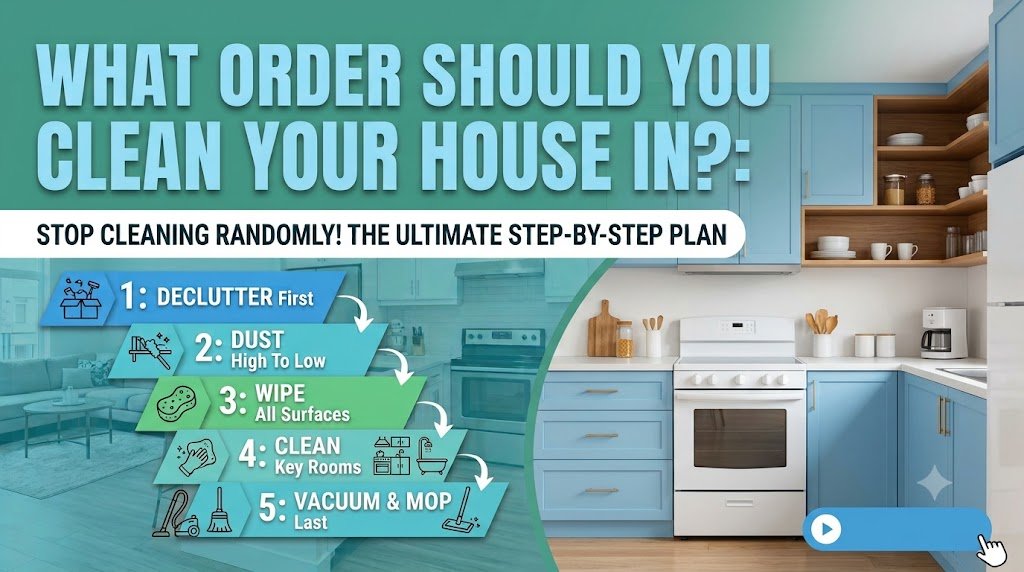
A good house cleaning order helps you work more efficiently and makes it easier to keep track of what has already been done. The basic idea is simple: remove clutter first, clean higher surfaces before lower ones, work through the rooms systematically, and leave the floors until the end.
If you are wondering what order you should clean your house in, the following routine can give you a practical starting point.
1. Start by Decluttering
Before using any cleaning products, walk through the rooms and remove things that are out of place.
Pick up clothes, toys, dishes, papers, and other items that are lying around. Put them where they belong or collect them in a basket to sort later.
Decluttering first gives you access to more surfaces and makes the actual cleaning process much faster.
You do not need to reorganize your entire home. Clear the areas you need to clean.
2. Gather Your Cleaning Supplies
Once the clutter is under control, collect everything you need before starting.
A basic house cleaning kit may include:
- Microfiber cloths
- Vacuum cleaner
- Broom and dustpan
- Mop and bucket
- Sponges
- Scrub brushes
- All-purpose cleaner
- Glass cleaner
- Garbage bags
- Rubber gloves
Keep your supplies together so you do not have to stop and search for products repeatedly.
Always follow the directions on cleaning-product labels and make sure a product is appropriate for the surface you are cleaning.
3. Work From Top to Bottom
One of the most useful rules for cleaning your house efficiently is to start with higher surfaces.
Dust can fall onto lower surfaces while you work. If you clean the floor first and then dust a shelf, you may end up cleaning the floor twice.
A practical order is:
Ceiling fans and high surfaces → shelves → furniture → countertops → lower surfaces → floors
This simple approach can reduce unnecessary repeat work.
4. Dust the Rooms
After decluttering, begin dusting.
Use a microfiber cloth or suitable duster on accessible surfaces. Work around the room rather than randomly jumping between areas.
Pay attention to:
- Shelves
- Furniture
- Window sills
- Door frames
- Baseboards
- Light fixtures
- Ceiling fans
- Vents
You do not necessarily need to dust every surface every day. Your cleaning frequency can depend on how quickly your home collects dust.
5. Clean the Bedrooms
Bedrooms are usually straightforward once clutter has been removed.
Start by making the bed and putting away clothing or other items. Then dust furniture and accessible surfaces.
A basic bedroom cleaning routine can include:
- Changing or washing bedding
- Dusting furniture
- Cleaning mirrors
- Emptying trash
- Vacuuming or sweeping the floor
If furniture can be moved safely, you can occasionally clean underneath it as part of a deeper cleaning session.
6. Move to the Living Room and Common Areas
Next, clean the rooms where your household spends the most time.
In the living room, dust furniture, shelves, tables, and other accessible surfaces. Straighten cushions and remove items that do not belong there.
Remember areas that are easy to overlook, such as:
- Remote controls
- Door handles
- Light switches
- Window sills
- Side tables
- Baseboards
After the surfaces are cleaned, the floor can be handled later.
7. Clean the Kitchen
The kitchen usually deserves extra attention because cooking can leave behind crumbs, grease, spills, and residue.
Start by clearing the countertops. Then clean the sink, faucet, countertops, stovetop, cabinet handles, and frequently used appliances.
A regular kitchen cleaning may include:
- Wiping countertops
- Cleaning the sink
- Wiping cabinet fronts
- Cleaning appliance handles
- Cleaning the stovetop
- Removing visible food residue
- Emptying the trash
- Cleaning the floor
For inside ovens, refrigerators, or other appliances, follow the manufacturer’s cleaning instructions.
If you are using cleaning chemicals, never mix products unless their labels specifically indicate that they can be combined.
8. Clean the Bathrooms
Bathrooms are another area that benefits from a systematic approach.
Start with surfaces that may require some time for a cleaning product to work, following the product’s directions. Then clean the sink, faucet, mirror, toilet, shower, bathtub, and other appropriate surfaces.
Pay attention to:
- Shower surfaces
- Tile
- Grout
- Faucets
- Sink areas
- Mirrors
- Cabinet handles
- Bathroom floors
Use products appropriate for the specific material. Not every cleaner is suitable for every type of tile, stone, fixture, or finish.
9. Clean High-Touch Surfaces
Before moving on to the floors, take a quick look at frequently touched areas throughout the house.
Depending on your household, these may include:
- Door handles
- Light switches
- Cabinet handles
- Faucet handles
- Appliance handles
- Remote controls
Use an appropriate cleaning product for the surface and follow any manufacturer’s care instructions.
10. Vacuum the House
Once dusting and most surface cleaning are finished, it is time to vacuum the floors.
Start with carpets and rugs, then move to hard floors if your vacuum is designed for them.
Pay attention to:
- Room edges
- Corners
- Under accessible furniture
- Rugs
- High-traffic areas
- Areas around furniture
Vacuuming after dusting helps collect dust and debris that have fallen onto the floor during earlier cleaning steps.
11. Sweep and Mop Hard Floors
After vacuuming, sweep any areas that need it and then mop appropriate hard-floor surfaces.
The correct cleaning method depends on the flooring material. Some floors can tolerate more moisture than others, so check the manufacturer’s care recommendations when necessary.
Avoid leaving excessive water on flooring unless the flooring instructions specifically allow it.
12. Take Out the Trash
Once most cleaning tasks are finished, collect garbage from the rooms and take it to the appropriate disposal area.
Check kitchen, bathroom, bedroom, and office trash cans.
Replacing the liners at the end also means you are not carrying garbage around while cleaning other areas.
13. Do a Final Walk-Through
After finishing the main cleaning, take a few minutes to walk through the house.
Look for anything you may have missed:
- A dusty shelf
- A spot on a mirror
- An uncleaned countertop
- Items that are still out of place
- A floor area that needs another pass
- Trash that needs to be removed
This final check can help you catch small details without having to restart the cleaning process.
A Simple House Cleaning Order to Remember
If you want an easy routine to remember, use this sequence:
Declutter → Gather supplies → Dust high areas → Clean surfaces → Clean bedrooms and living areas → Clean kitchen → Clean bathrooms → Clean high-touch areas → Vacuum → Mop → Take out trash → Final check
You can adjust this order depending on your home and the cleaning you are doing.
Should You Clean One Room at a Time?
There is no single method that works for every household.
Cleaning one room at a time can be helpful if you prefer seeing a completed space before moving on. Another approach is to perform the same task throughout the entire house—for example, dust every room first and vacuum every room afterward.
For a small home, either method can work well. For a larger home, choosing one approach and sticking with it can make the job feel more organized.
How Often Should You Clean Your House?
The ideal house cleaning schedule depends on your household and how quickly different areas become dirty.
Basic tasks such as tidying, handling dishes, and cleaning obvious spills may need attention frequently. Dusting, vacuuming, bathroom cleaning, and floor care can be handled according to your household’s needs.
Less frequent tasks, such as cleaning baseboards, ceiling fans, cabinet interiors, and other overlooked areas, can be included in a monthly or occasional deep-cleaning routine.
Homes with children, pets, or heavy daily activity may require more frequent cleaning in certain areas.
Common Cleaning Mistakes to Avoid
Even a good cleaning order can become inefficient if you make a few common mistakes.
Try to avoid:
- Cleaning floors before dusting
- Using one dirty cloth throughout the house
- Applying too much cleaning product
- Using a product that is unsuitable for a surface
- Ignoring product instructions
- Mixing cleaning chemicals
- Spending too much time on one small area
- Cleaning without removing clutter first
A consistent system is usually more useful than trying to rush through every task.
Final Thoughts
The best order to clean your house is the one that prevents you from repeating work and helps you stay organized.
Start by removing clutter, gather your supplies, and work from high surfaces toward lower ones. Clean your rooms and give extra attention to kitchens and bathrooms. Once the dust and surface cleaning are finished, vacuum and mop the floors.
You do not have to follow this routine perfectly every time. Adjust it to your home, schedule, and cleaning needs. The most important thing is having a simple system you can repeat consistently.